Celtic Cross: A Thoughtful Embroidery Design Review
First Impressions: Reverent, Balanced, and Quietly Bold
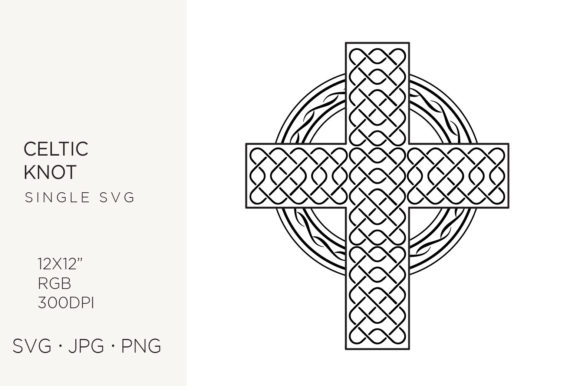
When I opened the Celtic Cross design file, what struck me first wasn’t intricacy—it was intention. The proportions feel grounded: a strong central cross with interlaced knots flowing into the arms and circle, not overcrowded but rich with symbolic weight. It reads as timeless rather than trendy—ideal for customers who value meaning over flash. As an embroidery designer who’s stitched hundreds of religious, heritage, and decorative motifs, I immediately sensed this one would hold up well on fabric: clean outer contours, no fragile filigree, and generous negative space between key elements. That breathing room matters—especially when translating from screen to stitch.
Real-World Use: From Tote Bag to Nursery Pillow
Last week, I used Celtic Cross to embroider a linen tea towel for a local boutique’s St. Patrick’s Day collection. We paired it with soft oatmeal thread on natural undyed linen—no contrast tricks, just honest texture meeting thoughtful design. It worked beautifully: the knotwork stayed legible, the circle didn’t collapse, and the overall effect felt handmade, not digital. Later, I tested it on a baby onesie (cotton jersey) using lightweight cutaway stabilizer—and again, it held its shape without puckering. That versatility tells me Celtic Cross isn’t just an icon; it’s a reliable workhorse for real craft business needs.
Where It Shines—and Where to Pause
This design excels on medium-weight woven fabrics: cotton canvas for tote bags, brushed twill for aprons, terry cloth for kitchen towels, and stable knits for sweatshirt embroidery. Its moderate detail level makes it forgiving on textured surfaces—unlike overly fine Celtic motifs that blur on looped terry or fleece. It also translates cleanly to embroidered patches: the outer edge is smooth enough for clean cutting, and the internal lines are spaced to avoid thread build-up in satin stitch zones.
That said, I’d avoid it on ultra-small hoops (under 3 inches) unless you’re willing to simplify manually—the inner knot details may compress too tightly. On stretchy fabrics like performance tees or thin baby rib knit, always pair it with appropriate stabilizer and test stitch density first. And while it works on dark fabric, keep thread color contrast in mind: light ecru or heather grey can read softly on black; go bolder (navy, forest green, charcoal) for clarity. For curved surfaces like caps, position it toward the front panel—not the crown—where distortion is minimal.
Customer Impact: Meaning Meets Craftsmanship
As an Etsy seller and small shop product developer, I pay close attention to how designs influence buyer trust and giftability. Celtic Cross lands with quiet confidence—it doesn’t shout, but it invites pause. Customers recognize its symbolism instantly, yet it avoids cliché thanks to balanced spacing and restrained ornamentation. When stitched cleanly on a wool-blend blanket or a linen pillow cover, it elevates the entire piece: no extra branding needed, no explanation required. That kind of visual shorthand builds brand consistency across handmade product lines—from holiday embroidery kits to personalized wedding gifts.
I’ve noticed repeat buyers respond especially well when the same motif appears across complementary items (e.g., matching tea towel + oven mitt + apron). That cohesion signals intentionality—not just decoration. And because Celtic Cross sits comfortably in both sacred and secular contexts, it fits diverse niches: Irish heritage shops, spiritual wellness brands, monastic-themed stationery lines, even minimalist home goods.
Practical Designer Notes You’ll Actually Use
- Always test on scrap fabric first—especially if stitching on textured or stretchy material. Check how fill stitch settles in the circle and whether knot intersections remain distinct.
- Review stitch density before sending to machine. Dense areas (like the center knot) should flow smoothly without thread stacking or overheating your needle.
- Confirm hoop size compatibility. If your smallest hoop is 4×4”, verify the design fits comfortably with at least ¼” margin.
- Inspect small details at actual stitch scale. Zoom in on your embroidery software—do any interior lines vanish or merge when scaled down?
- Test in black and white mockups. Does the silhouette hold up? Does it read clearly against both light and dark backgrounds?
- Use proper stabilizer: medium-weight cutaway for knits, tear-away for stable wovens, and fusible for lightweight linens.
- Check licensing before commercial use. Since the description says “You Can use this digital graphics elements to create your own logo design, wall art, handmade craft items…”, confirm whether resale of finished embroidered products or digital embroidery files is permitted under the license.
Final Thought: Not Just Another Icon—A Design That Earns Its Place
Celtic Cross isn’t flashy. It won’t dominate a busy social media feed—but it will earn a second look on a well-made tote bag at a craft fair. It won’t overwhelm a baby’s onesie, but it will make grandparents pause and smile. As a designer who evaluates hundreds of embroidery files each year, I appreciate how rarely a single motif balances reverence, clarity, and adaptability so well. It belongs in your core library—not as filler, but as foundation. Whether you’re building a cohesive boutique line, creating personalized gifts, or developing printable mockups for client pitches, Celtic Cross delivers consistent, professional results. Just remember: let the fabric, thread, and intention guide the final stitch—not the file alone.